Quality and comfort sound like they should go hand in hand. In reality, a lot of clothing manages to deliver one without the other.
Some shirts feel soft for a week and then fall apart. Others are clearly well-made but stiff, scratchy, or uncomfortable to actually wear. Getting both right at the same time is harder than it sounds, which is exactly why premium cotton t-shirts stand out.
This article looks at quality and comfort as two separate challenges, and how premium cotton manages to solve both without forcing a compromise.
Two Different Problems, One Fabric
Quality and comfort aren’t the same thing, even though people often use the words interchangeably.
Quality is about durability, construction, and consistency over time. Comfort is about how something feels against your body in the moment. A shirt can technically be high quality and still feel uncomfortable, or feel great briefly while falling apart quickly.
Why This Distinction Matters
Understanding this difference helps explain why some expensive shirts disappoint and why some affordable ones occasionally outperform pricier alternatives. The fabric itself is what bridges these two separate qualities successfully.
The Quality Side: What Actually Makes a Shirt Last
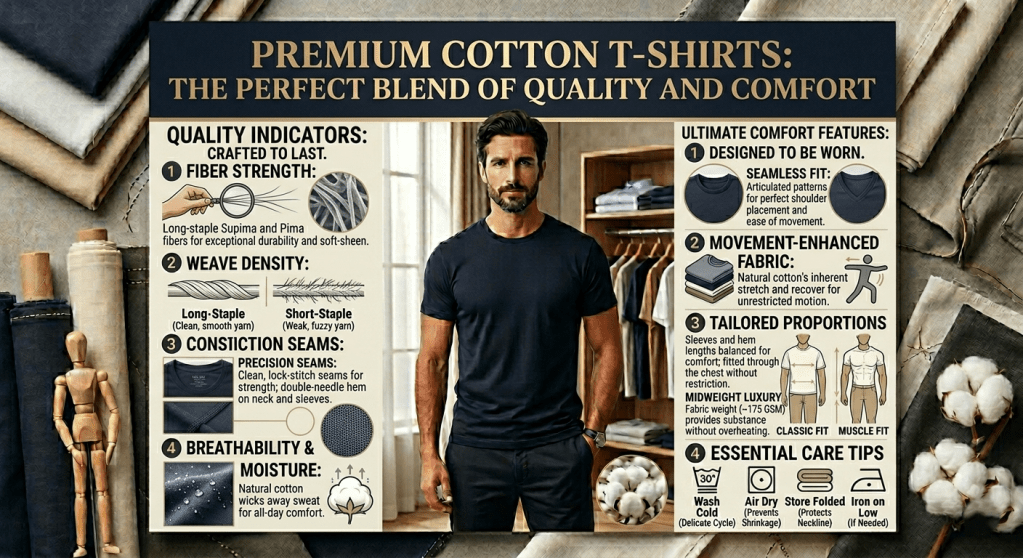
Quality isn’t a vague feeling. It comes down to specific, identifiable factors in how a shirt is made.
Fiber Length and Strength
Premium cotton varieties like Pima and Supima use longer fibers than standard cotton. Longer fibers create stronger yarns that resist breaking, pilling, and thinning out over repeated washes.
Weave Density and Structure
A tighter, more consistent weave holds its shape better than a looser one. This directly affects how well a shirt resists stretching out at the collar, sleeves, and hem.
Reinforced Seams
Double-stitched construction at high-stress points, like shoulders and underarms, prevents fraying and seam separation that often plagues cheaper, single-stitched shirts.
Consistent Quality Control
Brands focused on real quality clothing tend to maintain consistency across batches, meaning the shirt you buy today should feel and perform the same as one bought months later.
The Comfort Side: What Actually Makes a Shirt Feel Good
Comfort, like quality, comes down to specific physical properties rather than just subjective preference.
Softness at a Fiber Level
Smoother, longer cotton fibers create less friction against skin. This is why premium cotton often feels noticeably softer immediately, rather than requiring several washes to break in.
Breathability and Airflow
A well-constructed weave allows air to pass through more easily, helping regulate body temperature during physical activity or warm weather.
Moisture Management
Quality cotton tends to absorb and release moisture more efficiently than cheaper blends, reducing that damp, clingy feeling after sweating.
Flexibility Without Restriction
Premium cotton, especially blended with a small percentage of elastane, allows natural movement without feeling tight or restrictive throughout the day.
Where Quality and Comfort Intersect
The most interesting part of premium cotton isn’t where quality and comfort exist separately, but where they directly support each other.
Durability Preserves Comfort Over Time
A shirt that holds its shape and softness after dozens of washes maintains comfort far longer than one that quickly becomes thin, stiff, or misshapen.
Comfort Encourages Proper Care
Shirts that feel genuinely good tend to get worn more carefully and washed more thoughtfully, which in turn helps preserve their quality longer.
Fit Bridges Both Categories
A well-fitted shirt feels more comfortable because it doesn’t pull, ride up, or bunch awkwardly. That same fit also tends to reflect more careful pattern-cutting, a hallmark of better construction.
How Fabric Weight Balances Both Qualities
GSM, or grams per square meter, plays a surprisingly large role in balancing quality and comfort simultaneously.
The Mid-Weight Sweet Spot
Most well-regarded shirts fall between 180 and 220 GSM. This range feels substantial enough to suggest durability while remaining light enough to stay breathable and comfortable.
Why Extremes Struggle to Balance Both
Very lightweight fabric often sacrifices durability for comfort, wearing thin quickly. Very heavy fabric can sacrifice comfort for durability, feeling stiff or overly warm in everyday situations.
Why This Balance Matters for Everyday Style
Quality and comfort don’t just matter individually. Together, they directly influence how a shirt looks when worn.
Structure Creates a Cleaner Look
Durable, well-woven fabric holds its shape on the body, creating a more polished silhouette compared to limp or stretched-out alternatives.
Comfort Affects Posture and Confidence
When a shirt doesn’t pull or irritate, it’s easier to move naturally and stand confidently, which subtly improves how an outfit looks overall. This is the quiet engine behind comfortable fashion that actually performs, rather than just claiming to.
The Result: Effortless Stylish Clothing
This combination is exactly what turns a basic cotton tee into stylish clothing, without requiring flashy patterns or unnecessary embellishments.
Why Premium Cotton Aligns With Current Fashion Trends
Modern menswear has shifted significantly toward valuing both quality and comfort over flashy, short-lived trends.
Relaxed, Structured Silhouettes
Boxier fits with clean shoulder lines are becoming more popular, balancing comfort with a more deliberate, structured appearance.
A Shift Toward Investment Basics
More shoppers are prioritizing fewer, better-made pieces over large quantities of cheap, disposable clothing, reflecting broader fashion trends toward sustainability and value.
Minimal Branding, Maximum Substance
Subtle or absent logos continue trending, putting more focus on how a shirt actually feels and performs rather than visible branding alone.
The Financial Logic Behind Quality and Comfort
Beyond how a shirt feels and looks, there’s a clear financial argument for prioritizing both qualities together.
Cost Per Wear Favors Premium Options
A higher-priced shirt that lasts several years often costs less per wear than multiple cheap shirts replaced repeatedly within months.
Recognizing a Genuine Yard of Deal
Paying a fair price for a shirt that consistently delivers both comfort and durability represents a real yard of deal, rather than chasing the lowest price regardless of performance.
Fewer Purchases, Less Hassle
Investing in quality basics reduces the frequency of shopping for replacements, saving both money and time over the long run.
How to Identify This Balance Before You Buy
Knowing what to look for makes it much easier to find shirts that genuinely deliver both quality and comfort.
Check the Fabric Composition
Look for terms like combed cotton, Pima, or Supima, which typically indicate stronger, softer fibers.
Feel the Fabric Weight
The shirt should feel substantial without being stiff, generally landing in that 180 to 220 GSM range for most everyday situations.
Inspect Construction Details
Turn the shirt inside out and check for clean, even double stitching, particularly at the shoulders and hems.
Caring for Shirts That Deliver Both Qualities
Proper care helps preserve both the quality and comfort of premium cotton over time.
Wash in Cold Water
Cold water reduces fiber breakdown and shrinkage, preserving both fit and softness over repeated washes.
Avoid High Heat Drying
Air drying or low-heat settings help maintain shape and prevent the fabric from becoming stiff or brittle over time.
Give Shirts Time to Rest Between Wears
Rotating through several shirts rather than wearing the same one repeatedly reduces overall fiber stress and extends lifespan.
Frequently Asked Questions
Can a t-shirt really be high quality and comfortable at the same time?
Yes. Premium cotton, with the right fiber length, weave density, and construction, delivers both qualities simultaneously without requiring a trade-off between them.
Which matters more, fabric quality or fit, for overall comfort?
Both matter significantly. Great fabric in a poor fit can still feel restrictive, while a great fit in low-quality fabric won’t feel comfortable for long or hold up over time.
Does higher cost always mean better quality and comfort?
Not always. Price should reflect actual material and construction quality rather than branding alone. Checking fabric details remains important regardless of price point.
How long should a premium cotton t-shirt remain both comfortable and durable?
With proper care, a well-made premium tee can comfortably last two to three years or more while maintaining both softness and structural integrity.
Are blended cotton fabrics better for comfort than 100% cotton?
It depends on personal preference. Small amounts of elastane can add stretch and flexibility, while 100% cotton offers maximum breathability and a more natural feel.
What’s the easiest way to test comfort and quality before buying?
Feel the fabric directly, check the stitching by turning the shirt inside out, and review the listed fabric composition and weight if shopping online.
Conclusion
Quality and comfort aren’t competing priorities, even though many shirts fail to deliver both at once. Premium cotton solves this by combining stronger fibers, better construction, and breathable, soft fabric into a single, well-balanced shirt.
This is the real foundation behind genuine premium fashion, where performance and feel matter just as much as appearance.
Choosing premium apparel built around both quality and comfort isn’t an unnecessary luxury. It’s simply a smarter, more reliable way to dress, day after day, without constantly choosing between how a shirt feels and how long it lasts.


